



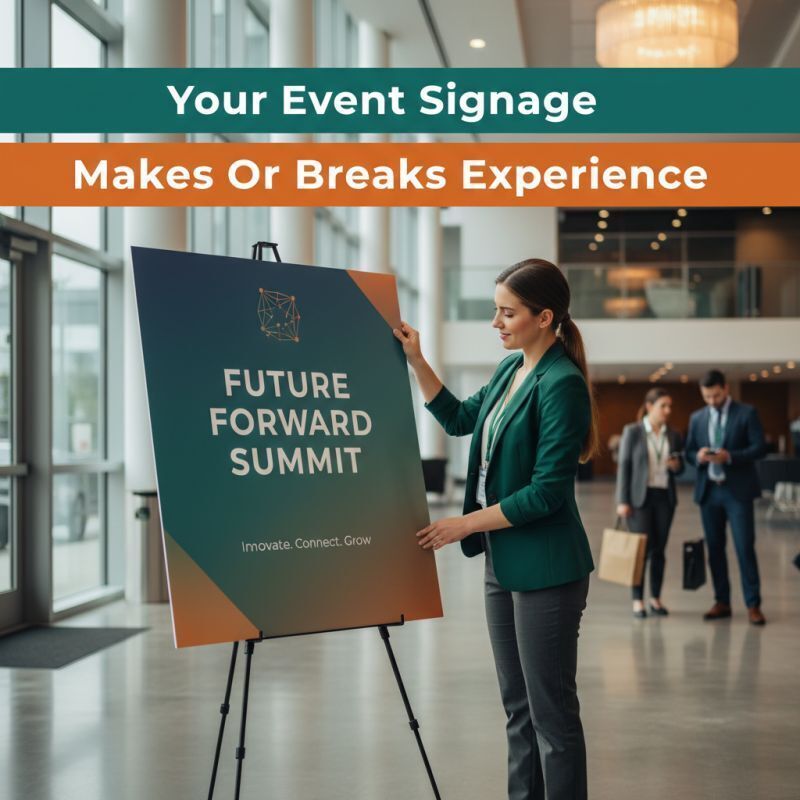
Your attendees form an opinion about your event before the first speaker takes the stage. The signs they encounter from the parking lot to the registration desk shape their entire experience. Poor signage creates frustration, wasted time, and a perception that your organization lacks attention to detail.
Why Event Signage Determines Your Conference Success
The global events industry reached $1.2 trillion in 2024 and continues growing at nearly 10% annually. Corporate events alone account for the largest market share, with spending expected to hit $169 per attendee per day by 2026. Within this competitive landscape, the details separate forgettable events from memorable ones.
Digital wayfinding reduces attendee navigation time by 42% at large events. Interactive displays boost engagement by 48% compared to static signs. These numbers translate directly to attendee satisfaction scores and repeat attendance rates.
Event signage functions as your silent staff member. It answers questions before attendees ask them. It reinforces your brand at every touchpoint. It creates photo opportunities that extend your reach on social media. Most importantly, it frees your actual staff to handle higher-value interactions rather than pointing people toward the restrooms.
The Six Types of Event Signage Your Conference Needs
Directional and Wayfinding Signs
Attendees should never wonder where to go next. Effective wayfinding starts at the parking lot entrance and continues through every decision point inside the venue.
Place directional signs at intersections, long hallways, and any location where paths diverge. Signs at intersections should identify what rooms are available at each turn. Long corridors need signs halfway down to reassure attendees they are heading the right direction.
Use clear icons alongside text. People process visuals faster than words. Arrows, room symbols, and restroom icons communicate instantly across language barriers.
For multi-track conferences with session rooms, networking areas, and sponsor booths, a color-coded system simplifies navigation. Assign each track a color and carry that color through all related signage, floor graphics, and schedule displays.
Welcome and Registration Signs
First impressions happen at registration. Large format welcome banners establish your brand presence and set the professional tone for everything that follows.
Registration area signage should include clear queue management indicators, alphabetical check-in sections if applicable, and visible instructions for badge pickup or self-check-in kiosks. Step and repeat banners behind registration create immediate photo opportunities that attendees share on social media.
Agenda and Schedule Displays
Printed agenda boards and digital schedule displays reduce the constant stream of "what time is the next session" questions. Position these at high-traffic areas including registration, hallway intersections, and outside main session rooms.
Digital signage offers flexibility for real-time updates. If a session runs long or a speaker cancels, you can update the display immediately. Static printed schedules work well when your agenda is locked and provide a backup when technology fails.
Sponsor Recognition Signs
Sponsors fund your event. Proper recognition through high-quality signage increases their likelihood of returning and elevating their sponsorship level.
Pop-up displays, vinyl wall graphics, and mounted banners showcase sponsor logos prominently. Position sponsor signage in high-visibility areas including entrances, main stage backdrops, and networking spaces. Rotating digital displays ensure all sponsors receive equitable exposure throughout the event.
Session Room Identification
Attendees need to confirm they have arrived at the correct location. Session room signs should include the room name or number, current session title, speaker name, and session time.
Foam board signs on easels work well for temporary conferences. Retractable banners provide a more polished look and can be reused across multiple events. For permanent or recurring venues, consider acrylic signs with interchangeable inserts.
Branded Environmental Graphics
Transform any venue into your branded space with environmental graphics. Vinyl wall wraps, window graphics, floor decals, and hanging banners create an immersive experience that keeps attendees engaged with your brand.
Stair wraps turn functional spaces into striking directional tools. Column wraps add visual interest to otherwise bland structural elements. Photo backdrop stations with your branding generate social media content that extends your event reach well beyond the venue walls.
Material Selection for South Florida Events
Florida's climate demands careful material selection. Intense UV exposure, high humidity, and the possibility of outdoor components require weather-resistant options.
For Indoor Events
Foam board provides lightweight, professional appearance at an affordable price point. It works well for session room signs, directional indicators, and temporary displays. Foam board does not handle moisture well, so keep it strictly indoors.
Acrylic delivers a sleek, modern look for permanent or high-end applications. It resists scratches and maintains clarity over time. Use acrylic for welcome signs, room identification, and any signage that will be reused across multiple events.
Fabric banners and table throws add texture and absorb sound. They fold for easy transport and resist wrinkles with proper storage. Fabric works especially well for registration backdrops and exhibit booth displays.
For Outdoor Components
Aluminum signs resist rust and withstand South Florida sun, rain, and humidity. They maintain structural integrity through hurricane season and beyond. Use aluminum for parking lot directional signs, building entrance markers, and any permanent outdoor installation.
Corrugated plastic provides a durable, waterproof option for temporary outdoor signage. It handles Florida rain without warping and resists UV fading for short-term deployments. Corrugated plastic works well for yard signs directing attendees from parking areas to venue entrances.
Vinyl banners with UV-resistant inks remain vibrant despite prolonged sun exposure. Mesh vinyl allows wind to pass through, preventing billowing and potential damage during gusty conditions. Mesh banners work especially well for outdoor welcome displays and sponsor recognition.
Designing Signs That Actually Get Read
Visibility and readability determine whether your signage works. Follow these principles for maximum effectiveness.
Text Size Guidelines
A common rule suggests one inch of letter height for every ten feet of viewing distance. At fifty feet, your text should be at least five inches tall. This ensures attendees can read directional signs before they reach decision points.
For close-range reading like session room signs, maintain minimum text heights of half an inch for body copy and one inch for headlines. Always test readability by stepping back to typical viewing distances.
Contrast and Color
High contrast between text and background improves readability across lighting conditions. Dark text on light backgrounds or light text on dark backgrounds both work well. Avoid color combinations that create eye strain, like red text on blue backgrounds.
Carry your brand colors throughout all signage for visual consistency. This reinforces brand recognition and creates a cohesive event experience. If your brand colors lack sufficient contrast for readability, use them as accents while employing high-contrast combinations for essential information.
Hierarchy and Simplicity
One clear message per sign. Attendees should understand the sign's purpose within two to three seconds. If your sign requires more than a quick glance, simplify it.
Use visual hierarchy to guide the eye. Largest text for most important information, supporting details in smaller type. Icons and arrows communicate faster than words when directing movement.
The ROI of Professional Event Signage
Investing in quality signage delivers measurable returns across multiple dimensions.
Reduced Staff Burden
Every sign that answers a common question frees your staff to focus on meaningful interactions. Registration staff can welcome attendees warmly rather than constantly pointing toward session rooms. This improved service quality elevates your event's perceived professionalism.
Based on industry benchmarks, well-designed wayfinding systems reduce direction-related inquiries by 25% or more. For large conferences, this translates to hundreds of staff interactions redirected toward higher-value activities.
Improved Attendee Satisfaction
Attendees who navigate easily arrive at sessions relaxed rather than frustrated. They have positive associations with your event from the moment they arrive. This satisfaction shows up in post-event surveys and repeat registration rates.
Research shows that 64.6% of attendees agree the venue experience can make or break their overall event perception. Signage forms a major component of that venue experience.
Enhanced Brand Perception
Professional signage signals organizational competence. It demonstrates that your company pays attention to details and values the attendee experience. This perception extends to your products, services, and brand reputation overall.
The visual consistency created by branded signage reinforces brand recognition at every touchpoint. Attendees leave with a clearer mental image of your brand identity.
Extended Reach Through Social Media
Photo-worthy signage generates organic social media exposure. Step and repeat backdrops, creative welcome displays, and visually striking environmental graphics encourage attendees to capture and share photos. This user-generated content extends your event's reach well beyond attendees.
Planning Your Event Signage Strategy
Start your signage planning at least six weeks before the event date. This timeline allows for design iterations, production, and shipping without rush fees.
Week 6: Assessment and Planning
Walk through the venue space, either physically or through detailed floor plans. Identify every decision point where attendees might hesitate or take wrong turns. Note parking entrances, building entrances, registration areas, session rooms, restrooms, networking spaces, and sponsor areas.
Create a comprehensive signage inventory listing every sign needed, its location, approximate size, and required content.
Week 5: Design Development
Work with your print provider to develop designs that align with your brand guidelines. Establish templates for different sign categories to ensure visual consistency across all pieces.
Review designs for readability at intended viewing distances. Get feedback from team members unfamiliar with the venue to catch navigation gaps you might miss.
Week 4: Content Finalization
Lock in all text content including session titles, speaker names, sponsor logos, and directional information. Last-minute changes increase costs and risk errors.
Week 3: Production
Submit final files for production. High-quality large format printing requires adequate lead time for proper color calibration and quality checks.
Week 2: Shipping and Staging
Receive completed signage and inspect for quality and accuracy. Stage signs organized by installation location for efficient setup.
Event Week: Installation
Arrive early enough for thorough installation. Walk the attendee journey from parking through sessions to verify signage placement. Make adjustments based on actual lighting conditions and sight lines.
Working With Your Local Print Partner
A local print partner familiar with your venues and climate conditions provides advantages that national online printers cannot match.
Local providers can visit your venue to assess signage needs firsthand. They understand South Florida's humidity, UV exposure, and weather patterns. They can deliver completed signage directly to your venue and even assist with installation.
Quick turnaround for last-minute changes or additions becomes possible when your printer operates nearby. If a sign arrives damaged or a last-minute speaker change requires new session signage, local production can respond within hours rather than days.
Local print shops also understand regional permitting requirements for outdoor signage. They can advise on material choices that comply with venue restrictions and local regulations.
CONCLUSION
Professional event signage transforms good conferences into great ones. It guides your attendees seamlessly, reinforces your brand consistently, and frees your team to focus on creating meaningful connections rather than answering repetitive questions.
Your next corporate event deserves signage that makes a lasting impression. Minuteman Press Boca Raton produces custom conference signs, banners, directional displays, and environmental graphics designed to withstand South Florida conditions while elevating your brand presence.
Call 561-392-8626 to discuss your upcoming event or request a quote HERE. Our team will help you create a comprehensive signage strategy that keeps your guests moving and your brand shining.
FAQ SECTION
Q: How far in advance should I order event signage for a Boca Raton conference? A: Plan for six weeks minimum. This allows time for design development, revisions, production, and shipping without rush fees. For large conferences at venues like The Boca Raton resort or Palm Beach County Convention Center, longer lead times help ensure everything arrives inspection-ready.
Q: What materials hold up best for outdoor event signage in South Florida? A: Aluminum and corrugated plastic resist Florida's humidity, UV exposure, and sudden rain showers. For banners, mesh vinyl allows wind to pass through during gusty conditions common in Palm Beach County. Avoid standard paper or foam board for any outdoor application.
Q: Can you produce signage for events at Palm Beach area venues? A: Yes. Minuteman Press Boca Raton serves the entire Palm Beach County area including West Palm Beach, Delray Beach, Boynton Beach, and Jupiter. We can deliver directly to your venue and assist with installation logistics.
Q: What size should directional signs be for a large conference venue? A: Text should be readable from the distance where attendees make navigation decisions. Generally, allow one inch of letter height for every ten feet of viewing distance. For a fifty-foot hallway, main directional text should be at least five inches tall.
Q: Do you offer rush production for last-minute event signage needs? A: Yes. As a local Boca Raton print shop, we can often accommodate urgent requests that national online printers cannot. Contact us directly at 561-392-8626 to discuss your timeline and requirements.

