



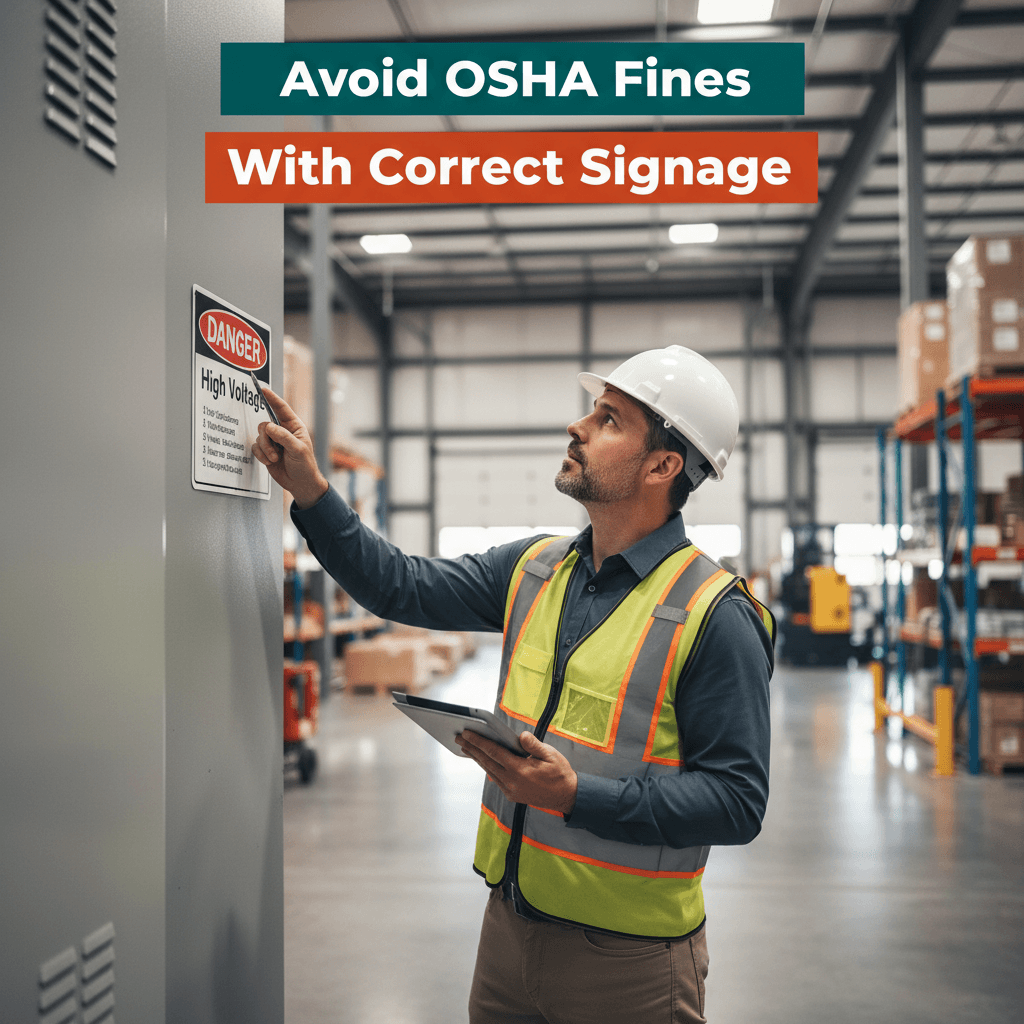
Understanding OSHA Safety Sign Classifications
OSHA classifies safety signs into distinct categories based on hazard severity. The federal standard 29 CFR 1910.145 establishes specifications for accident prevention signs and tags, requiring businesses to use standardized designs that workers can recognize instantly.
Danger Signs: Immediate Hazard Indicators
Danger signs communicate the highest level of risk. These signs indicate situations where death or serious injury will result if the hazard is not avoided. OSHA requires danger signs to use a red, black, and white color scheme with the safety alert symbol. Common applications include high voltage areas, hazardous chemical storage zones, and machinery with exposed moving parts.
Warning Signs: Potential Serious Hazards
Warning signs alert workers to potentially hazardous situations that could result in death or serious injury if not avoided. The orange and black color scheme distinguishes these from danger signs. Businesses use warning signs for areas where equipment operation presents risks, where chemical exposure is possible, or where environmental conditions require heightened awareness.
Caution Signs: Minor to Moderate Hazard Alerts
Caution signs address situations where minor or moderate injury may occur. Yellow backgrounds with black lettering make these signs easily recognizable. Wet floor warnings, trip hazards, and areas requiring personal protective equipment typically use caution signage. These signs help prevent the slip, trip, and fall incidents that account for approximately 33% of all workplace injuries.
Notice and Safety Instruction Signs
Notice signs communicate information unrelated to personal injury hazards. Blue and white color schemes identify these signs, which provide directions, identify areas, or convey general information. Safety instruction signs offer guidance on proper procedures, emergency protocols, and best practices for workplace safety.
OSHA Design Requirements for Compliant Signage
Beyond color coding, OSHA establishes specific design standards that safety signs must meet. Understanding these requirements helps businesses avoid compliance gaps that could result in citations during inspections.
Physical Construction Standards
All OSHA compliant signs must feature blunt or rounded corners and dull edges to prevent injury during handling or accidental contact. Fastening devices must be safely located to avoid creating additional hazards. Signs must maintain structural integrity in their intended environment, resisting weather, chemicals, or other conditions that could compromise readability.
Readability and Visibility Requirements
OSHA requires signal words to be readable from a minimum distance of 5 feet. This standard ensures workers have adequate time to recognize hazards and take appropriate action. Sign placement must occur at or near the hazard location, positioned where workers will see the warning before encountering danger.
Text and Symbol Guidelines
Sign wording must be concise, easy to understand, and present a positive suggested action. Messages should use clear language appropriate for the workforce, including bilingual options where necessary. Symbols and pictograms can supplement or replace text, particularly in multilingual workplaces or where quick recognition is essential.
2025 OSHA Penalty Structure for Safety Violations
OSHA penalty amounts increased in January 2025, making compliance more financially critical than ever. Understanding the current fine structure helps business owners appreciate the true cost of inadequate safety signage.
Serious Violation
$16,550 per violation
Other-Than-Serious Violation
$16,550 per violation
Willful or Repeated Violation
$165,514 per violation
Failure to Abate
$16,550 per day
These penalties represent a 2.6% increase from 2024 rates, continuing the inflation-adjusted increases OSHA implements annually. Beyond direct fines, businesses face indirect costs including increased insurance premiums, lost productivity, and potential litigation. The National Safety Council estimates the average workplace injury costs employers over $40,000 in direct expenses alone.
The Business Case for Professional Safety Signage
Investing in proper safety signage delivers measurable returns beyond compliance. Research demonstrates that workplaces with effective safety sign systems experience fewer accidents, improved operational efficiency, and stronger safety cultures.
Accident Prevention Impact
Clear hazard warnings reduce workplace incidents by influencing behavior at critical decision points. Workers who see danger signs before encountering hazards make safer choices. Studies indicate that proper safety signage combined with training programs produces significant reductions in recordable incidents.
Financial Return on Safety Investment
Chief financial officers surveyed by Liberty Mutual reported that each dollar invested in injury prevention returns two dollars or more. The calculation becomes straightforward: professional safety signs costing hundreds of dollars prevent injuries costing tens of thousands. OSHA research shows that workplaces inspected for safety compliance saved an average of $355,000 in injury claims over four years compared to similar uninspected facilities.
Operational Efficiency Gains
Beyond injury prevention, safety signage improves workflow efficiency. Clear directional signs reduce confusion. Equipment operation warnings decrease damage incidents. Emergency signage ensures rapid response during critical situations. These operational benefits compound over time, contributing to productivity improvements across the organization.
Industry-Specific Safety Sign Requirements
Different industries face unique safety signage requirements based on their specific hazards. Understanding your industry's needs ensures comprehensive compliance.
Construction and Manufacturing
Construction sites require extensive fall protection signage, equipment operation warnings, and hazardous material indicators. Manufacturing facilities need lockout/tagout signs, machine guarding warnings, and respiratory hazard notices. Both industries must address the OSHA "Fatal Four" hazards: falls, struck-by incidents, electrocution, and caught-in/between accidents.
Healthcare and Medical Facilities
Healthcare settings require biohazard warnings, radiation caution signs, and chemical hazard indicators. Patient care areas need infection control signage. Emergency departments require clear directional and triage area identification. These facilities face heightened scrutiny due to the YMYL (Your Money or Your Life) nature of their operations.
Retail and Hospitality
Retail environments focus on slip and fall prevention, emergency exit marking, and back-of-house equipment warnings. Restaurants and hotels add food safety signage, kitchen hazard warnings, and chemical storage indicators. These customer-facing businesses must balance safety compliance with aesthetic considerations.
Safety Sign Implementation Best Practices
Effective safety signage programs follow established best practices that maximize impact while ensuring compliance.
Conducting a Safety Sign Audit
Begin with a comprehensive facility walk-through to identify all hazards requiring signage. Document existing signs for condition and compliance. Note areas where signage is missing, damaged, or inadequate. Create a prioritized remediation list based on hazard severity.
Sign Placement Strategy
Position signs at eye level where possible, ensuring visibility from normal approach paths. Install signs before workers encounter hazards, providing adequate reaction time. Consider lighting conditions, ensuring signs remain visible in all operating environments. For outdoor installations, account for weather exposure and reflectivity requirements.
Maintenance and Inspection Protocols
Establish regular inspection schedules to verify sign condition. Check for fading, damage, or obstruction. Replace signs showing wear before they become illegible. Document inspections to demonstrate due diligence during regulatory audits. Update signage when processes, equipment, or hazards change.
Palm Beach County Workplace Safety Landscape
Boca Raton and the broader Palm Beach County region represents one of Florida's most dynamic business environments. The area hosts more than half of Palm Beach County's corporate headquarters, creating substantial demand for professional workplace safety solutions.
The West Palm Beach-Boca Raton-Delray Beach metropolitan division contributes significantly to regional employment, with diverse industries ranging from healthcare and finance to construction and retail. Each sector faces unique safety signage requirements based on their operational hazards.
Local businesses benefit from understanding that Florida employers face the same OSHA standards as employers nationwide. The state's construction boom, growing healthcare sector, and expanding retail presence create ongoing demand for compliant safety signage solutions.
Choosing a Professional Safety Sign Provider
Selecting the right partner for safety sign production ensures compliance while optimizing value. Professional print providers offer expertise that generic sign suppliers cannot match.
Material Selection Expertise
Indoor and outdoor applications require different materials. Aluminum signs withstand weather exposure. Plastic substrates work well in chemical environments. Vinyl graphics suit temporary applications. Professional printers recommend appropriate materials based on your specific installation environment.
Compliance Verification
Experienced safety sign providers understand current OSHA and ANSI standards. They verify color specifications, confirm text sizing for readability requirements, and ensure proper symbol usage. This expertise prevents compliance gaps that could result in citations.
Custom Design Capabilities
While many hazards require standard signage, unique workplace conditions often demand custom solutions. Professional printers can create compliant signs addressing specific hazards, incorporating bilingual text, or matching corporate branding within regulatory guidelines.
Protect Your Workforce and Your Business
OSHA safety sign compliance represents more than regulatory checkbox completion. Proper signage protects employees from preventable injuries, shields businesses from costly penalties, and demonstrates organizational commitment to workplace safety. With violation fines reaching $165,514 and average injury costs exceeding $40,000, the investment in professional safety signage delivers clear financial returns.
Minuteman Press Boca Raton provides expert graphic design and print production services for all OSHA-required safety signs. Our team ensures your signage meets current compliance standards while delivering the durability and visibility your facility demands. Contact us at 561-392-8626 or visit bocaraton.minutemanpress.com to request your free estimate and protect your workplace today.
Frequently Asked Questions: OSHA Safety Signs in Boca Raton
What OSHA safety signs does my Boca Raton business need?
Required signage depends on your industry and specific workplace hazards. Most businesses need emergency exit signs, fire extinguisher location markers, and electrical hazard warnings at minimum. Construction, healthcare, manufacturing, and food service operations have additional requirements. A professional safety audit identifies all necessary signage for your facility.
How much do OSHA compliant safety signs cost in Palm Beach County?
Professional safety sign costs vary based on size, material, and quantity. Standard aluminum signs typically range from $15 to $75 each. Custom designs and specialty materials may cost more. Compare these costs against potential OSHA fines of $16,550 per violation to understand the value proposition of proper signage.
Can I print my own OSHA safety signs?
While OSHA allows custom sign creation, self-printed signs must meet all regulatory specifications for color, sizing, durability, and wording. Office printers typically cannot produce materials meeting weather-resistance and longevity requirements. Professional printing ensures compliance while delivering appropriate durability for your installation environment.
How often should safety signs be replaced?
Replace safety signs when they show fading, damage, or illegibility. Outdoor signs typically require replacement every 5-7 years depending on sun exposure. Indoor signs in harsh environments may need more frequent replacement. Establish regular inspection schedules to identify signs requiring replacement before they compromise safety communication.
Does Minuteman Press Boca Raton handle rush safety sign orders?
Yes. We understand that safety compliance needs often arise urgently, whether due to new hazards, OSHA inspection notices, or facility changes. Contact us at 561-392-8626 to discuss your timeline and we will work to meet your deadline while maintaining quality standards.

