

The conversation about property flyers in real estate often focuses on design quality — beautiful photography, compelling layout, premium paper stock. All of that matters. But the most sophisticated agents and developers in Boca Raton's competitive market have discovered that a property flyer's greatest untapped potential isn't in the design alone — it's in how the physical piece connects to a digital experience that continues working after the flyer leaves someone's hand.
A prospect who picks up your flyer at an open house in Mizner Park, puts it in their bag, and leaves has taken one step in a journey that may not culminate in a decision for days or weeks. The question is whether your marketing is still active and present when that decision moment finally arrives — or whether the conversation ended when they walked out the door. A strategically designed, digitally integrated property flyer keeps that conversation going.
The Shift From Information Delivery to Journey Creation
What Traditional Property Flyers Do Well — And Where They Stop
A well-designed property flyer excels at the first moment of contact. It creates a strong visual impression, communicates essential property details clearly, and gives a prospect something tangible to take with them. Those functions are genuinely valuable — and they're the reason physical flyers have remained relevant even as digital tools have proliferated throughout real estate marketing.
But traditional flyers have a significant limitation: they're static. The information they contain at the moment of printing is all the information they'll ever contain. There's no way to follow up with the prospect who picked one up. There's no mechanism for that prospect to easily access more information without a separate search. And there's no way to know whether anyone engaged with the flyer or what specifically caught their interest.
What Digital Integration Adds
A property flyer with a QR code that links to a dedicated property landing page changes the conversation entirely. It becomes the entry point of a trackable, extensible digital experience rather than a self-contained information packet. The prospect who scans the code reveals their interest — creating a digital signal that your marketing can respond to. The landing page they reach can contain far more content than any printed flyer: a full photo gallery, a video walkthrough, detailed floor plans, neighborhood information, and a seamless path to contact.
And critically, that digital engagement creates retargeting opportunities. A prospect who visited your property landing page from a flyer QR code has self-identified as interested — and can now be reached with follow-up digital advertising that keeps your listing in their consideration set as they continue evaluating their options.
Practical QR Code Strategy for Property Flyers
Not All QR Codes Are Created Equal
The most common mistake agents make with QR codes on property flyers is linking to their general website or a property's Zillow page. This creates a disconnected experience — the prospect scans the code, lands somewhere generic, and doesn't find the focused, high-quality property experience the flyer promised.
The most effective QR code destinations for property flyers are dedicated landing pages built specifically for that property and that campaign. These pages should feel like a continuation of the flyer's design — same visual identity, same photography, same tone — while expanding the experience significantly. They should load quickly on mobile devices, because QR codes are almost always scanned on phones, and a slow mobile experience is the fastest way to lose a warm prospect.
Multiple QR Codes for Multiple Destinations
Sophisticated property flyers can include multiple QR codes serving different purposes — one for a virtual tour, one for a photo gallery, one for a contact or inquiry form, one for a detailed floor plan. Each code serves a different prospect need and tracks a different type of engagement, giving the agent richer data about what aspects of the property are generating the most interest.
For a luxury condo development along the Intracoastal Waterway in Boca Raton, a flyer distributed to brokers and prospective buyers might include separate codes for the virtual tour of the model unit, the floor plan library, and the reservation inquiry form. Each scan is tracked separately, giving the developer specific data on where interest is concentrated and which aspects of the marketing are converting most effectively.
The Virtual Tour Integration Advantage
What Virtual Tours Add to the Buyer Journey
Professional virtual tours have become an expected element of Boca Raton luxury property marketing — and for good reason. They allow serious buyers to experience a property's spatial layout, flow, and atmosphere between in-person viewings in a way that static photography cannot provide. For out-of-area buyers considering relocation to Palm Beach County, a virtual tour accessed through a flyer QR code may be the first immersive experience of a property they can't easily visit in person.
A property flyer that connects directly to a high-quality virtual tour is doing something more valuable than providing contact information — it's providing a genuine preview experience that advances the buyer's evaluation process without requiring additional agent time or another scheduled showing. The buyer who has thoroughly explored a virtual tour before their first in-person visit arrives significantly more prepared and more committed, which translates directly into a more productive showing and a higher probability of an offer.
Positioning Your Listings as Technology-Forward
In a market where agents are evaluated partly on the sophistication and professionalism of their marketing, a flyer that connects seamlessly to a high-quality virtual tour communicates something specific about how you represent properties. Buyers and sellers both notice when an agent's marketing is meaningfully better than the standard — and digitally integrated property flyers are one of the most visible ways to demonstrate that marketing sophistication.
Design Considerations for Digitally Integrated Flyers
Balancing Visual Appeal With Functional Clarity
A property flyer that includes QR codes needs to incorporate them in a way that's visually integrated rather than awkward or afterthought-looking. Codes should be appropriately sized — large enough to scan reliably without dominating the design — and accompanied by brief, specific descriptive text that tells the prospect what they'll get when they scan. "Scan for virtual tour" is more compelling and more useful than a bare QR code with no context.
The visual hierarchy of the flyer should lead with the most compelling property content — the photography, the headline, the key details — and incorporate digital elements as value-adding features rather than distractions. A prospect who isn't ready to scan a code immediately should still have everything they need from the printed piece; the QR code extends the experience for those who want more.
Format Choices That Support Integration
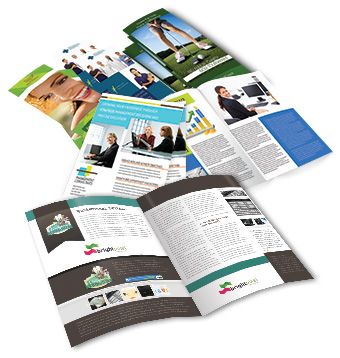
Tri-fold formats are particularly well-suited to digitally integrated property flyers because they create natural sections that can serve different purposes. An exterior panel for visual impact and headline information. An interior spread for detailed property information, photography, and key features. A closing panel for agent branding, contact information, and QR code destinations. This structure allows the flyer to function both as a standalone information piece and as a gateway to a richer digital experience.
For commercial real estate near Florida Atlantic University in Boca Raton, a tri-fold format allows an agent to present location advantages, building specifications, and floor plan options in the interior panels while using the back panel for QR codes linking to detailed property information and an inquiry form — giving prospective tenants or buyers a clear path to gather the information they need to make a serious evaluation.
Tracking and Measuring Flyer Performance
Making Printed Materials as Measurable as Digital Ads
One of the most significant advantages of QR code-integrated flyers is the measurement capability they provide. By using unique landing page URLs or tagged QR codes for each property or distribution occasion, agents can track exactly how many people from a specific open house, a specific broker event, or a specific neighborhood distribution interacted digitally with a property.
This data turns property flyer distribution from a marketing activity that's difficult to measure into one that produces actionable performance data. Which properties generated the most QR code scans per flyer distributed? Which design approaches produced higher scan rates? Which neighborhoods produced the most digitally engaged prospects? These answers, accumulated across multiple properties and campaigns, build a progressively more sophisticated understanding of what works in a specific market.
Minuteman Press Boca Raton: Your Property Flyer Partner
Minuteman Press Boca Raton's in-house graphic design team creates property flyers for real estate agents and developers throughout Boca Raton and Palm Beach County — combining strong visual design with the practical technical requirements of effective QR code integration. We produce on premium materials with print quality that reflects the standards of Boca Raton's luxury market, with fast turnaround times that keep pace with the speed of active real estate transactions.
Ready to Turn Your Property Flyers Into a Complete Marketing System?
A property flyer that connects to a digital ecosystem doesn't just inform — it converts. It tracks. It follows up. It keeps your listing in front of interested buyers long after the open house ends. Let Minuteman Press Boca Raton help you design and produce property flyers that bridge the best of print and digital for maximum impact in Boca Raton's competitive real estate market.
CALL US: 561-392-8626 | Request a Quote for Your Property Flyers